
Essentials
What grounds our work — pillars, connections, and shared responsibilities.

The Four Pillars of Our Work

Education
We advance inclusive and culturally relevant education that strengthens leadership, confidence, and critical thinking—supporting girls' retention in school and pathways into leadership and decision-making. (SDG 4 · SDG 5)

We focus on holistic well-being, with strong attention to mental health, gender-based violence prevention and response, and sexual and reproductive health. Our approach centers on healing, dignity, and community care, drawing on both traditional practices and modern knowledge. (SDG 3 · SDG 5)
Health & Wellbeing
We support women's economic empowerment through mentorship, skills development, and financial education, enabling sustainable livelihoods that strengthen community resilience and honour traditional economies. (SDG 1 · SDG 8 · SDG 5)
Social Entrepreneurship
We support women as leaders in climate resilience and environmental stewardship by integrating traditional ecological knowledge, including practices like taboo and customary marine management, with contemporary adaptation strategies. (SDG 13 · SDG 15)
Climate Leadership Action
Our work is grounded in Indigenous leadership, collective responsibility, and cultural continuity. We recognize women and girls as protectors of culture, family, and community—and as key agents of sustainable development.
Our Pillars of Strength
1. Advancing Gender Equality and Leadership
Recognizing women and girls as key agents of change in their communities.
2. Strengthening Community Resilience and Self-Reliance
Recognizing women and girls as Key agents to activate and mobilize individuals in their communities to build self reliance.
3. Promoting Inclusive Partnerships and Participatory Governance
Enabling women and girls to engage meaningfully with local governments, traditional leadership, and community institutions.
Why Women Carry the Future ?
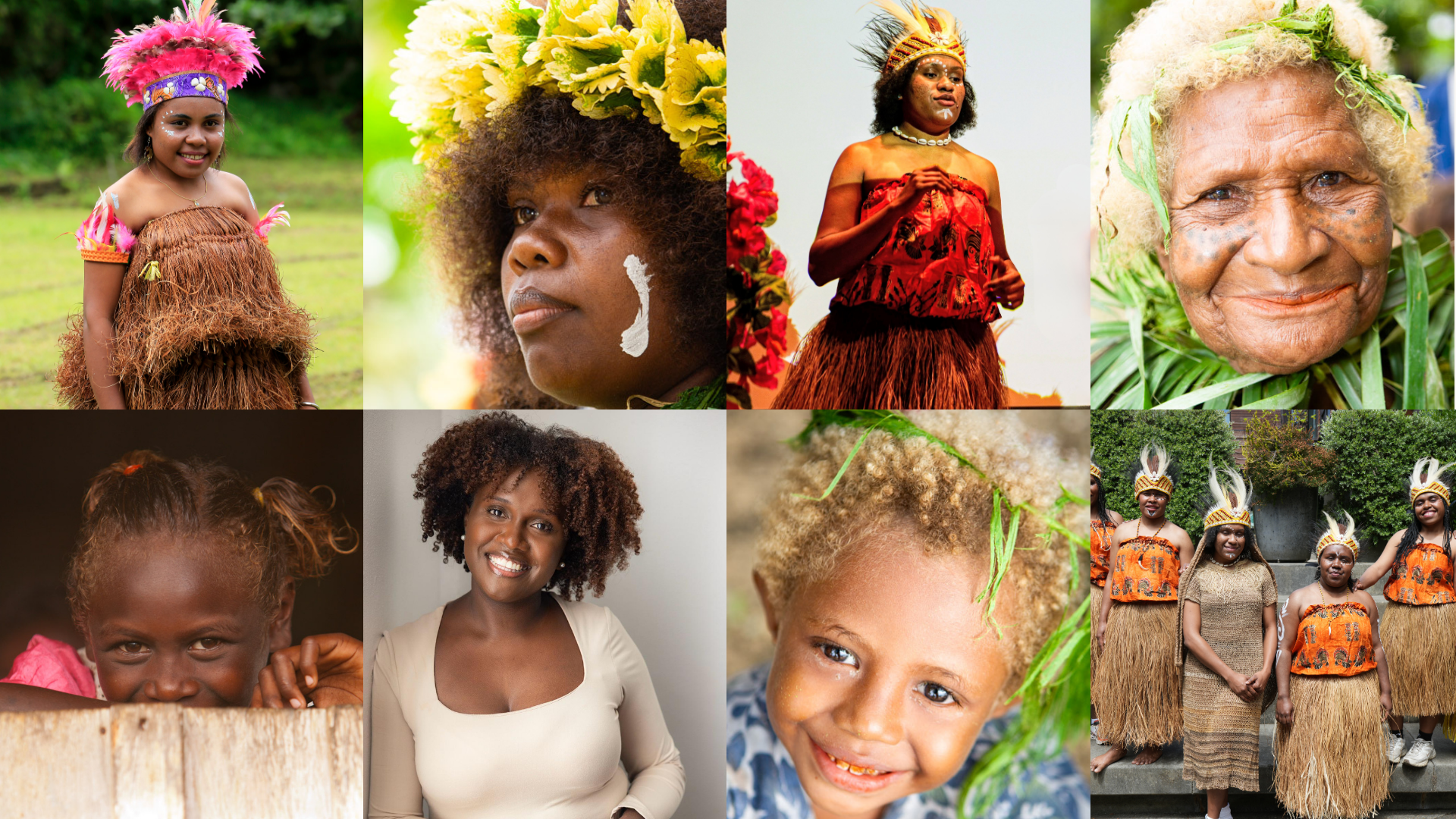
Women and girls are vital contributors and powerful agents of change in society. Real change occurs only when all genders are included, working together to create an inspiring environment for everyone. Although they are not always recognized, women’s contributions have transformed the world in countless ways and continue to do so.
At Melanesian Women Today, we value women’s roles and potential as leaders and agents of change within their communities and environments. We believe that women’s participation in a society's transition from preliterate to literate, from relatively autonomous communities to members of a nation contributing to the global economy, and in achieving equality, is essential for building inclusive, open, and prosperous societies that generate lasting change. As a result, families that adapt to new conditions or shifts in the economic and political landscape tend to succeed best. Women are the primary caregivers for children and the environment; they play a crucial role in fostering or impeding change within families and society as a whole.


What About Men ?
〰️
What About Men ? 〰️
We believe that engaging men as agents of change is essential to advancing gender equality. Achieving gender equality requires men and boys to work alongside women and girls to change the dynamics that hinder progress. The idea of involving men and boys in gender equality efforts is rooted in the belief that it is about transforming unequal power relationships between men and women. This involves challenging the status quo—traditional notions of masculinity and perceptions of manhood—and encouraging men to take responsibility for change by questioning power dynamics related to their actions and words at personal, interpersonal, and societal levels.
Melanesian Women Today supports and promotes working with men as advocates for gender equality—encouraging them to speak out as active agents for change and stakeholders who can influence social norms, behaviors, and stereotypes that perpetuate discrimination and inequality.
Men as Allies for Equality
Decolonizing Well-Being
At Melanesian Women Today,well-being is understood as the vitality of all relations—connecting women, families, communities, land, water, spirit, and sentient beings. True empowerment arises when these relationships are honored, nurtured, and sustained and reciprocated
Guided by the Vanuatu Development Framework, MWT employs well-being indicators grounded in Melanesian ways of being. These reflect the cyclical, relational, and place-persons worldview, encompassing education, health (including mental health), economic participation, cultural knowledge, environmental stewardship, and respect for all sentient beings.
Our approach decolonizes well-being by centering Indigenous knowledge, traditional governance, and communal responsibility. Progress is measured relationally: how women and girls walk confidently in their communities, how families and culture are strengthened, and how the well-being of land, waters, and sentient beings is upheld.
These indicators guide programs that are culturally anchored, responsive to lived realities, and designed to strengthen women’s agency while honoring the wider web of life that sustains communities and the more-than-human world.

A Relational Approach
Honoring our Values
Key Documents & References

The frameworks that support our advocacy and community impact.

Reach out to us !
the Pacific is stronger together