
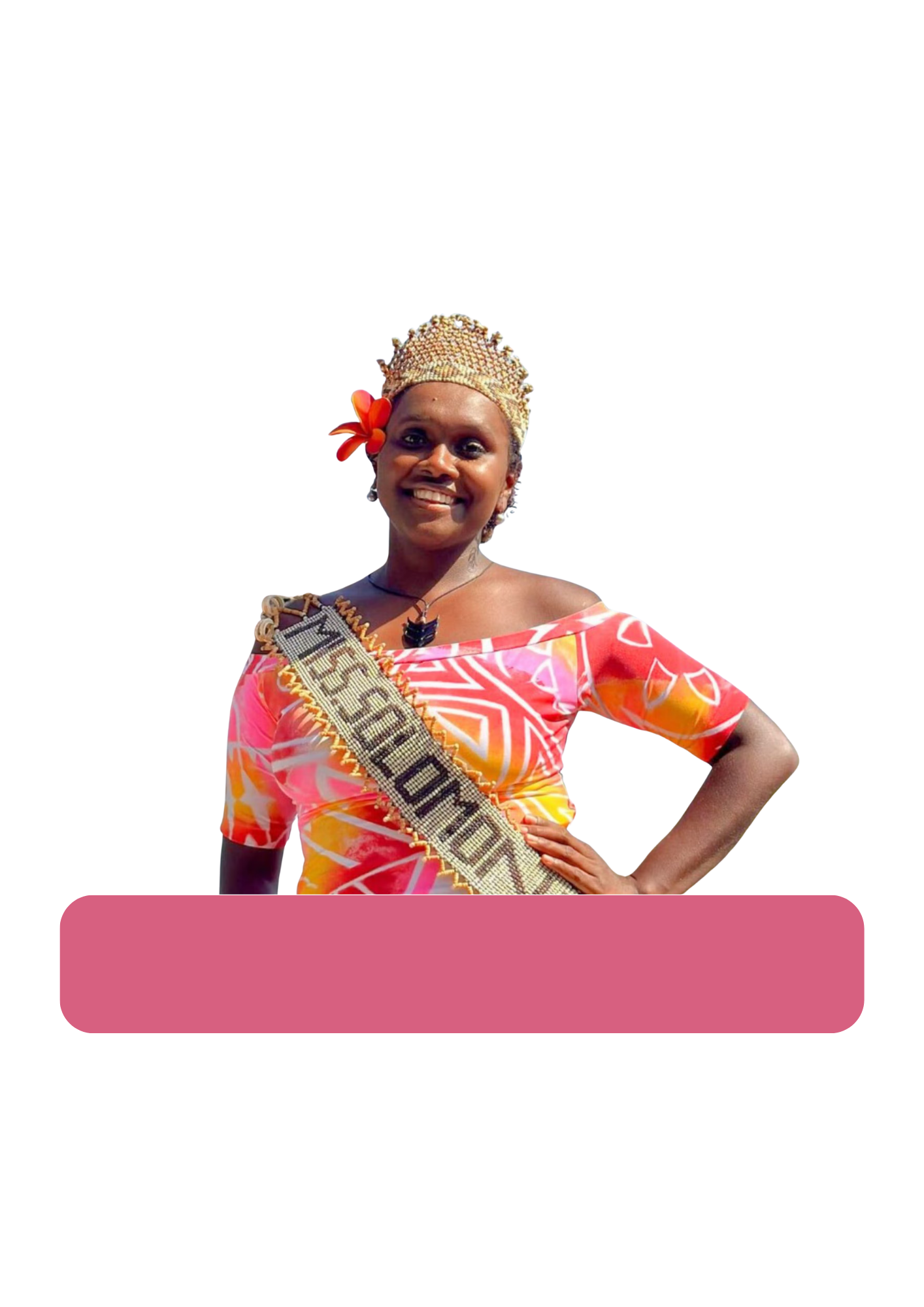

ELSIE POLOSOVAI
BIG SISTA
Sista Hemi Empawa (S.H.E)
Introducing Elsie Polosovai
A proud Melanesian woman stepping into her new role as BIG SISTA for Melanesian Women Today’s flagship programme: Sista Hemi Empawa (S.H.E).
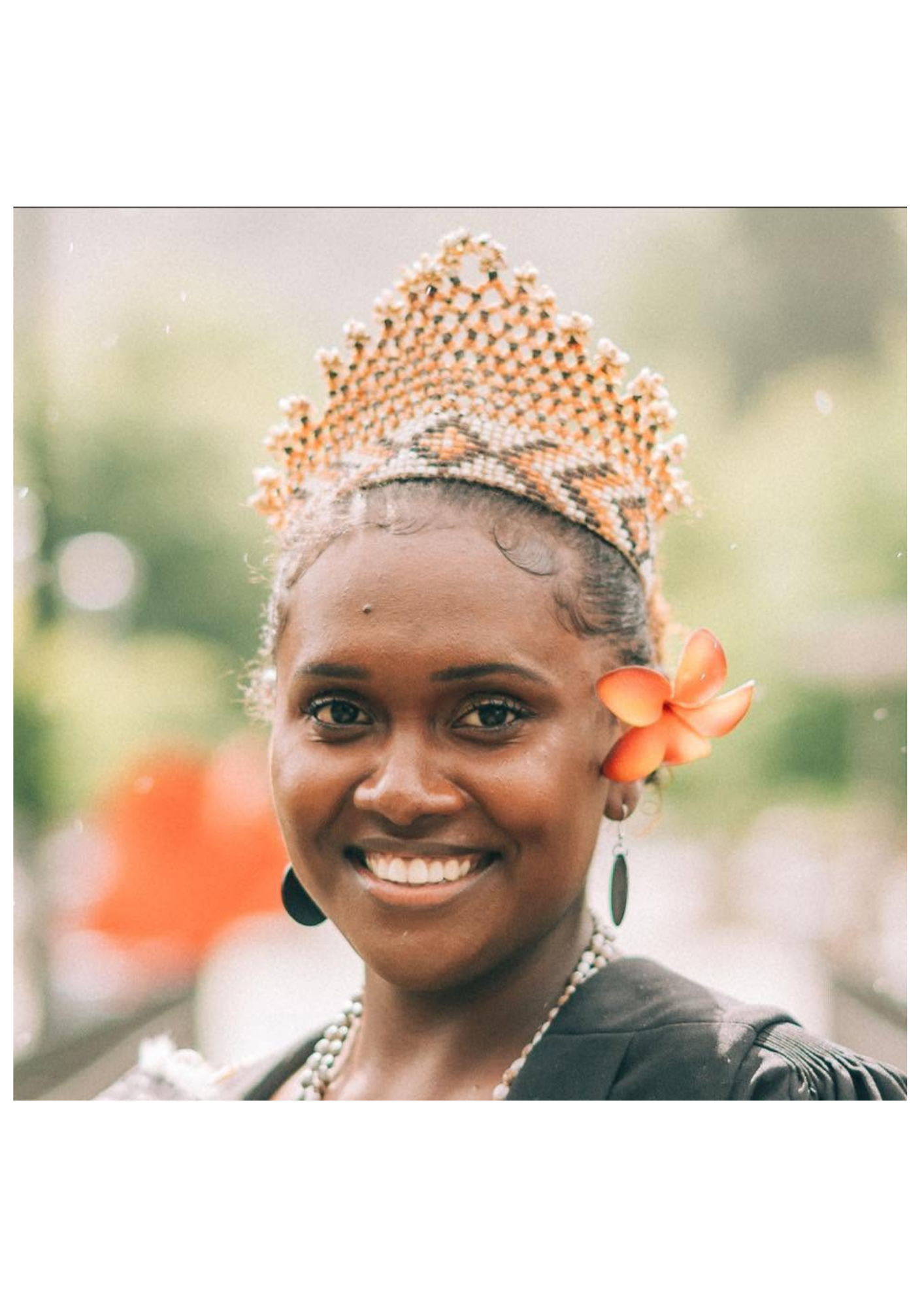
Elsie joins MWT as a cultural guide, mentor, and advocate for girls and women across Melanesia and the diaspora. Her leadership blends indigenous wisdom, sisterhood, and a deep commitment to collective empowerment.
Elsie is the former Miss Solomon Islands (2024-2025), a Melanesian advocate for girls’ empowerment, cultural storytelling, and women’s health. She works across communities, youth networks, and regional media to uplift the voices, confidence, and well‑being of young Melanesian women.

Her Role as BIG SISTA
Elsie speaks from within the wantok circle — not as a distant figure, but as a big sister.
Her mission is to build bridges:
between young girls scrolling on TikTok and the ancestral knowledge of their elders,
between diaspora youth and the heartbeat of their home islands,
between global partners and Melanesian models of well‑being, resilience, and cultural continuity.
The VOIS LAB
A free, Auckland-based pilot for Melanesian girls and young women aged 16–20, designed to nurture leadership, agency, and cultural pride. Through public speaking, creative expression, and cultural storytelling, the program develops practical communication skills within a supportive, values-driven environment that honors Melanesian identity and collective empowerment.
The idea is to start small, listen closely to participants, and collaboratively shape the program to best serve Melanesian girls. Over time, the aim is to co-create specialist skill sessions and digital opportunities for Melanesian girls across Aotearoa and the wider Melanesian region.
What makes The Vois Lab different?
The Vois Lab stands out because it gives participants practical, hands-on experience in real-world communications like answering a question in class, leading a live group discussion, or interviewing someone.. Instead of just practicing in a classroom, every participant gets a chance to create something real and public, building a portfolio of authentic work. This approach not only builds confidence, but also gives girls a platform to be heard and celebrated beyond the program itself. I would build it around the idea of a ‘Living Story Circle,’ where every participant is both a storyteller and a storykeeper. Instead of traditional workshops, girls co-create a living archive of Melanesian voices, blending digital memory-making with ancestral oral traditions.
01. SPEAK- finding your voice
Practise public speaking, spontaneous responses, introductions, presenting ideas, asking questions and speaking up when it matters.
The question: Can I express what I think and mean?
02. STORI - learning to communicate through stories
Explore personal experiences, family stories, culture, humour and identity. Learn how to turn an experience into a story people can connect with.
The question: What do I want people to understand, feel or remember?
03. PRESENCE — learning to be heard
Use acting exercises, voice, body language, improvisation and audience awareness to practise communicating with intention, even when nerves show up.
The question: How do I show up and communicate in my own way?
Who is this programme for?
This programme is for Melanesian girls and young women who want to strengthen their voice, embrace their cultural heritage, and connect with others in a space guided by the core values of Melanesian Women Today: empowerment, inclusion, respect, and collective leadership.
Rather than marketing it to every girl who wants to become a leader, I want to speak directly to girls who recognise themselves in one or more of these experiences:
- You have thoughts and ideas but sometimes struggle to express them out loud.
- You get nervous speaking in front of people, even when you know what you want to say.
- You want to communicate better at school, university, work or in community spaces.
- You enjoy stories, performance, culture or creativity but haven't had much opportunity to explore them.
- You want to meet other Melanesian girls and women without feeling you have to arrive with everything figured out.
You don't need to be naturally outgoing, already confident, or interested in becoming performers. A quieter participant should be just as welcome as someone who loves the spotlight.
What should participants leave with?
The pilot is designed with clear, values-based outcomes that Melanesian Women Today can evaluate and build on, ensuring accountability and ongoing growth.
By the end, participants should have had the opportunity to:
- Practise several forms of public speaking and communication.
- Develop and deliver a short speech or personal story.
- Practise listening, asking questions and interviewing.
- Receive constructive feedback in a supportive environment.
- Identify one communication skill they want to continue developing.
- Build meaningful connections with peers, mentors, and women from diverse backgrounds, fostering a strong sense of Melanesian sisterhood and intergenerational support.